Marco De Rossi


Disrupting learning: is education going down the way of the music industry?

According to Business Insider, the Khan Academy has just raised an extra 5 million dollars in funding. It was started in 2004 by an MIT graduate called Salman Khan, who started tutoring his cousin in math via Yahoo’s Doodle notepad. It went so well that other members of his family asked him to do the same, so Salman decided to record his lectures as videos and upload them onto YouTube. At this point, of course, they could be shared, and they were. This way of learning became very popular, and seven years later the Khan Academy is a well-funded charity that draws 39 million page views a month.

Assume 20 pageviews (videos) make up one student’s day of schooling; assume further 25 students in a real-life classroom, and 22 days of school in a month. That means that the Khan Academy takes the place of a very large 3500-classrooms school, being taught by, at most, ten extremely skillful teachers. Plus, each student can proceed at their own pace, with no need to sync with others that might prefer different speeds or learning times. Given the well known limits of traditional education as a learning method, it is easy to foresee continued success for endeavors of this kind.

That’s a big deal. According to the CIA’s World Factbook, 4.4% of the world’s GDP was spent on education in 2007. And world GDP was recorded at 75 trillion dollars in 2010 (in purchasing power parities). That means that the world market for education provision is worth something like 3.3 trillion. The Khan Academy’s successes may be a sign that a significant fraction of that market is going to get commodified, fast. When that happened to the music industry, it lashed back, hirinfg lobbyists to build legal barriers around its stream of revenues and lawyers to sue high school kids guilty of unlawfully sharing music files. I am not looking forward to what happens when universities get wind that they are being bypassed. Students in countries like the UK, where university tuition fees stands at three thousand pounds per year, are certainly going to want to bypass them: the alternative is getting into student debt, and the financial crisis is teaching us a thing or two about debt. Things could get ugly.

Marco De Rossi, the young founder of the Italian peer-to-peer online school Oilproject, dreams of putting online, on video every lecture of every course of every university in the country for free viewing. He certainly has the community to do it: what he needs is a one-line piece of legislation, that puts squarely in the public domain the intellectual property rights of taxpayer-funded university lectures. My guess is that it is now or never: either this legislation is made now or the education lobbyists will lock it down for good. Until the next Tahrir Square.
November 7, 2011     Alberto     complexity economics, Innovazione sociale     comment

Perché le politiche pubbliche non funzionano? Due conversazioni a cui prenderò parte

Le politiche pubbliche user generated – come Kublai, tanto per guardarmi in casa – sono assolutamente marginali, poco più che un esperimento interessante. Per ora. Ma cosa succederebbe se diventassero una modalità normale e accettata dell’azione pubblica? Dopo tanto pensare, sento il bisogno di confrontarmi su alcune nuove idee che ho cominciato a elaborare a partire dall’estate.

Questa settimana il confronto comincia dall’Apegreen di stasera a Milano (al Subway, zona Turati, ore 19.30), a cui partecipo con Alberto Masetti-Zannini (The Hub Milano), Giovanni Petrini (Fa’ la cosa giusta!) e Filippo Solibello (Caterpillar).

Si continua giovedì sera con una cosa molto difficile: provo a mettere tutto in fila in una lezione online per Oilproject. Tenterò di capire perché le politiche pubbliche funzionano così male, e cosa possiamo fare noi tutti, armati d internet e buona volontà, per farle funzionare meglio. Il contesto è molto adatto a sottolineare la potenza della rete nel produrre beni pubblici: Oilproject è “una scuola virtuale – gratuita ed aperta a tutti – in cui si discute di attualità, Internet e Innovazione [...] senza alcun fine al di fuori di quello della divulgazione libera dell’informazione. Con più di 9000 studenti, Oilproject è leader italiano nel campo del free e-learning.” L’ha fondata Marco De Rossi. A budget zero. Quando aveva quattordici anni. QED, immagino.

December 1, 2009     Alberto     e-government 2.0     3 comments

The end of music

Photo: thornj

Photo: thornj

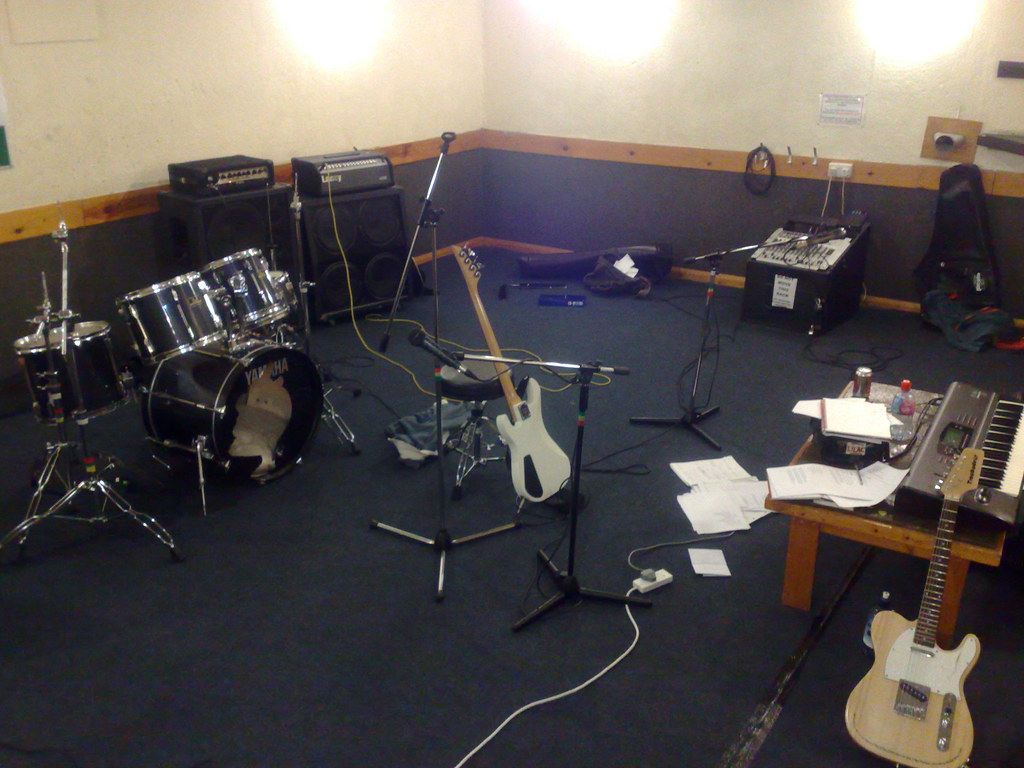
A friend of mine, an Italian singer-songwriter, went to Vinylmania to showcase her album, which is beautiful and hard-earned (two years’ work, close to 100% self-financed). It was a Sunday morning. The Giro d’Italia was passing through Milano, so public transport was jammed. She had to take a 30 euro taxi to get there. Of course almost no one turned up, and she ended up performing for the people working in the nearby booths. The showcase was hosted by a journalist, who is a friend of hers and could easily have asked her the same questions on the phone or in front of a drink. She sold one CD and had to give three away for free.

An Italian bias? Hardly. Another friend of mine – she too is a singer-songwriter – lives in Denmark, and her situation is very similar. She too is very talented, she too recently released a beautiful album that incorporates a lot of hard work, and she too finds it extremely hard to find somebody to give her a chance. She’s feeling very low. All of this passion, all of this talent – and no one seems to be interested.

I have many more of these anecdotes. Too many. I find it harder and harder to feel at home in the music scene, where I lived for many years. I find fewer and fewer artists remotely interesting. I can’t stand any more wanking on guitar saturation, or 60s-70s-80s-90s references. The same people who make records refuse to buy them, and gets everything off eMule or BitTorrent. Many people perform, but almost no one is listening. So no one is evolving, and we continue to happily imitate discontinued bands – The Beatles, The Pixies, Nirvana. It’s like an orgy for necrophiliacs.

Maybe I’m just getting old, it happens. Or maybe creativity has moved on. When I was a boy, a bright young man who felt creative would naturally start a band: it was a common language, a way to leapfrog grownups in getting attention. Musicians were cool, setting trends. The most interesting boys and girls today start internet companies, or devise environmentally friendly technologies. Marco, who created the largest Italian online school when he was 14, or the CriticalCity crew are more creative than any musician in their low-waist jeans and Rickenbacker guitars. Makes sense, too: how are bright kids going to find a place in the sun in a gerontophiliac arena like music, where very few big stars are younger than 55-60?

I like to read over the list of Kublai’s creative projects. The notion of creativity employed is intentionally open, leaving it to the creative community itself to define its borders. Here’s what emerges: creativity is not remotely contained in the arts. Much hotter are technology and social ad environmental projects. As for music, it is pretty marginal.

Conclusion with unsolicited advice: don’t play, don’t start bands, stay well clear from music and the music scene. It’s a Night of the Living Dead kind of world, with the dead reaching for the living and consuming their souls. If you have other talents use them, go where you can have more space. And if, like me, you have the bad luck that you like music, and cannot really replace it with anything else, disappear in some basement to play, to listen, to search for some truth. And maybe, if you are patient enough, and loving enough, someday the times will a-change again.

[Grazie a Francesco]

June 3, 2009     Alberto     La vita, l'universo e tutto quanto, musiconomics     13 comments


© Contrordine compagni - Wordpress-Theme 0816 by Netprofit Webdesign & Robert Hartl and personalized by Freddy