I have the honor of having been invited to teach (if that’s the right word) at this year’s Salzburg Global Seminar.
This turns out to have been founded in 1947 by Clemens Heller, a Harvard student native of Salzburg, together with two American colleagues. The idea was to
create at least one small center in which young Europeans from all countries, and of all political convictions, could meet for a month in concrete work under favorable living conditions, and to lay the foundation for a possible permanent center of intellectual discussion in Europe.
This discussion was urgent. Europe lay in ruins. Austria itself, like Germany, was occupied by the Allied troops, and dismembered into four zones: the American, British, French and Soviet Zone. It was not at all clear what path Europe would take. Recent history showed that World Wars could and did ride on each other’s wake – only twenty years of increasingly tense “peace” had separated World War I from World War II. It was becoming clear that Western and Central Europeans were no longer the masters of their own destiny. The Soviet Union and the United States both wanted to shape Europe’s future. Europeans, demoralized and exhausted, could hardly stop them.
But there was one thing they could do. They could use whatever little space was afforded by the competition between the two superpowers to pull together, forge a common vision for the Old Continent, and build the capacity to implement it. This was the Salzburg Seminar’s mission: “a Marshall Plan of the mind”, the ability to imagine a different future as a critical element of recovery. This plan was targeted at young people, with the potential to become leaders in postwar Europe and America.
The mission succeeded. Intellectual stimuli were off the scale: Margaret Mead and Wassily Leontief were among the teachers of the 1947 seminar. Over the decades, as Europe grew more peaceful, integrated, and prosperous, the Seminar shifted from a Euro-American focus to a global one. It is now one of several world-class leadership programs.
We find ourselves at a juncture where places like the Salzburg Global Seminar might look like yesterday’s news. We are informed that nationalism, nativism, exceptionalism, de-humanising of political adversaries, even racism – all concepts that Clemens Heller might have thought buried in the rubble of Third Reich – are back. We are told the “perceptions” of our fellow citizens are as important, and as capable of shaping our world, than the facts of science. The narrative of supremacy by bloodright is powerful (padroni a casa nostra, “lords of our own house”, is the slogan of Italian xenophobic party Lega Nord. It is nonsensical in so many ways that I don’t want to even start breaking it down, but it does work). And a scapegoat is always handy in politics. So, this is the new normal, or at least part of it.
I will not stand for this. It is, simply, nonsense. We have huge problems to solve: safeguard the global environment before the Anthropocene wipes out the last tigers and blackens the coral reefs. Rejuvenate our democracies. Build decent capacity in government (don’t get me started). Steer global population down towards a long-term sustainable level. Figure out a way to live in a world with no “jobs”, and engineer a symbiosis with AIs. Preserve, extend and cherish the glorious tapestry of Earth’s cultures.
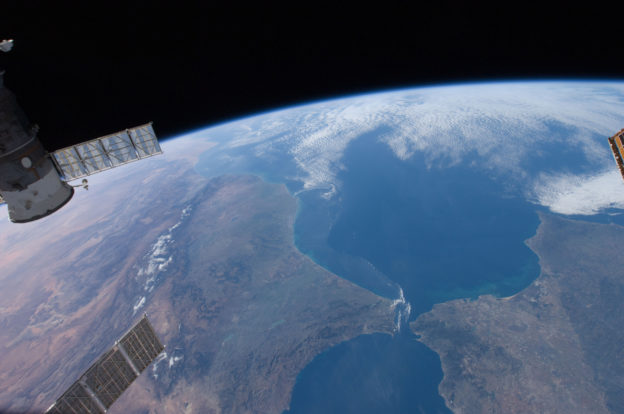
The task at hand is enormous. We need everyone, every last person who wants to be a full participant and accepts to contribute to humanity’s adventure on this blue planet, our home. People, almost all of them, are willing to step in as full participants, and work, and love, and learn from each other. So, with the obvious individual exceptions, I want nation states, border guards, police, clergy, TV anchormen and any bloody idiot that thinks they can make them feel unwelcome to stay out of their way. Inclusion, abolition of borders, freedom of trade and movement are better for everyone. You’d think Europeans, of all people, would know this. Clemens Heller did.
And so do I. I am a globalist. I want to build webs of friendship and love and business partnerships, and I want these webs to span the globe. I want to build global knowledge, to spread far and wide. This is our birthright as humans: contribute to the future of the species, and the planet it inhabits. It is a global goal, and needs a global scope. I vow to oppose any political movement that seeks to prevent well-intentioned people from everywhere to work together towards this goal.
In Europe, this means supporting more, deeper, more irreversible integration; and welcome any transfer of sovereignty from States to the European Union, as long as it can be shown to be beneficial to European citizens, especially the least privileged. It also means supporting welcoming new members into the Union. I vow to do those things, too.
Today, the Salzburg Global Seminar is right where I want to be.

