I am intrigued by post-growth economics, and its epic struggle to replace neoclassical economics as the main lens through which to view economic structures and activity. Post-growth scholars believe that exponential growth in perpetuity is neither possible nor desirable per se. The impossibility of infinite growth on a finite planet is seen as self-evident: there is a famous quip, attributed to Kenneth Boulding, that “anyone who believes exponential growth can go on forever in a finite world is either a madman or an economist”. As for the desirability of growth, scholars point out that self-reported happiness across different countries is only weakly correlated with per capita gross domestic product, a phenomenon known as Easterlin’s paradox.
In recent years, post-growth scholarship has made impressive progress. Big ideas, better theories, better models, better data, robust policy innovation… A new generation of academic superstars has emerged: Thomas Piketty, Jason Hickel, Julia Steinberger, Timothée Parrique, Kate Raworth, Stephanie Kelton, Mariana Mazzucato, Tim Jackson, Randall Wray. These are scholars that command global attention and serious research funding, and are training and inspiring a host of young researchers. They are also rediscovering the real-life “alien economies” that are all around us; neoclassical economists view them through the lens of backwardness and dismiss them, whereas new economic thinkers treat them as alternative models in their own right and learn from them.
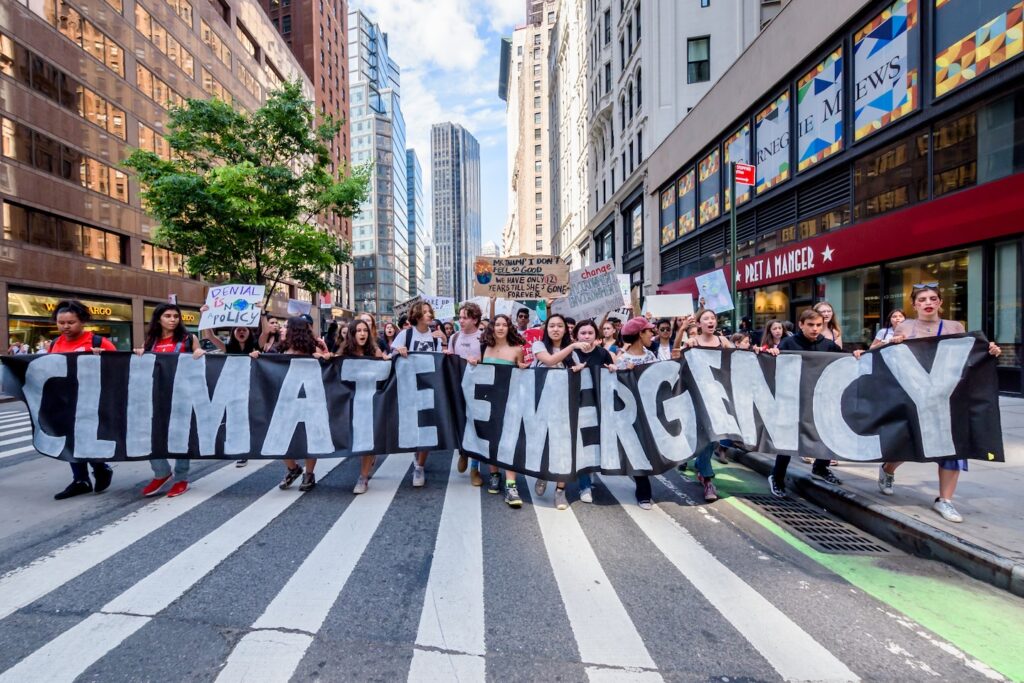
And it’s not just progress in research. There are more and more signs that ordinary people all over the world support post-growth policies. Jason Hickel has collected results from studies, surveys and polls on public acceptance for post-growth policies and post-capitalism itself, and the numbers are impressive. A few examples: one poll finds that 56% of respondents worldwide agrees that “capitalism does more harm than good” – and that percentage is 69% in France, and 74% in India. Another one that over three quarters of respondents support the idea of a public job guarantee (72% in the UK, 78% in the USA, 79% in France). A third reports that 93% of participants in citizen assemblies in Europe supports sufficiency policies. In Belgium, where I live, a poll published in June 2026 finds that, in a representative sample, over three quarters of respondents support a tax on great wealth. This is true in all regions of the country, and across the political spectrum. For now, people underestimate the appetite of their fellow citizens for this kind of reform: a recent very large-scale (130,000 respondents) global poll finds that 89% of the population demands more robust climate action, but they also believe that others are unwilling to act to get it, though they themselves are. This, however, is nothing that political organizing cannot solve. The fact that these policies, though obviously popular, are not happening suggests regulatory capture by the wealthy, the only group which stands to lose from a move to post-growth economies.
Because these and other results are so aligned with one another, I became intrigued with a recent paper by Savin and collaborators that seeks to disentangle the support for post-growth policies to that for environmental policies. Their idea, if I understand it correctly, is the following: people assume that economic growth is bad for the climate and the environment. So, they might support post-growth policies not as such, but because of the perceived advantages for the climate and the environment. The questionnaire was not published, but I imagine they constructed it around the desirability of economic growth independent of its effects on climate and the environment (and maybe other economic and social variables, such as income- and wealth inequalities).
To address this, here we move beyond binary choices and instead examine how EU citizens perceive the importance of economic growth for achieving the wider social and environmental objectives of a sustainable society. By focusing on the desirability of growth rather than its trade-offs, we clarify whether citizens view economic growth as a necessary condition to achieve social and environmental goals.
Results: out of 19,000 respondents in 13 countries of the European Union, approximately 60% of them hold pro-growth views.
Fair enough, but what does this result actually tell us? As far as I can see there is a powerful empirical argument that economic growth does come with environmental- and climate tradeoffs. There is no need to assume them, because they have been verified: green growth is not happening at any significant scale. Tim Parrique has a very clear explainer here:
And those are not the only tradeoffs. There is another important one: that beyond growth and inequelity. Ole Peters has shown that systems that grow on average while practically all its participants are reduced into poverty are perfectly possible : indeed, such systems arise naturally when the income of individuals grows randomly and multiplicatively over time, like most financial markets most of the time. They generate not only inequality, but extreme inequality.
So, there is not much point in asking people if they like economic growth, assuming that it has no bad consequences. At best, it’s a meaningless question: of course I am in favour of anything that has no bad consequences, on the off chance that it might have some good ones. At worst, it is misleading respondents, implying that economic growth could come with no bad consequences for climate, the environments, and global equality – when empirical scholarship largely says the opposite.
Did the authors do that? Hopefully this is just me misunderstanding the paper. I have written to the authors asking to read their questionnaire.
Image credit: Washington Post, fair use
